Celestis Obscura
2026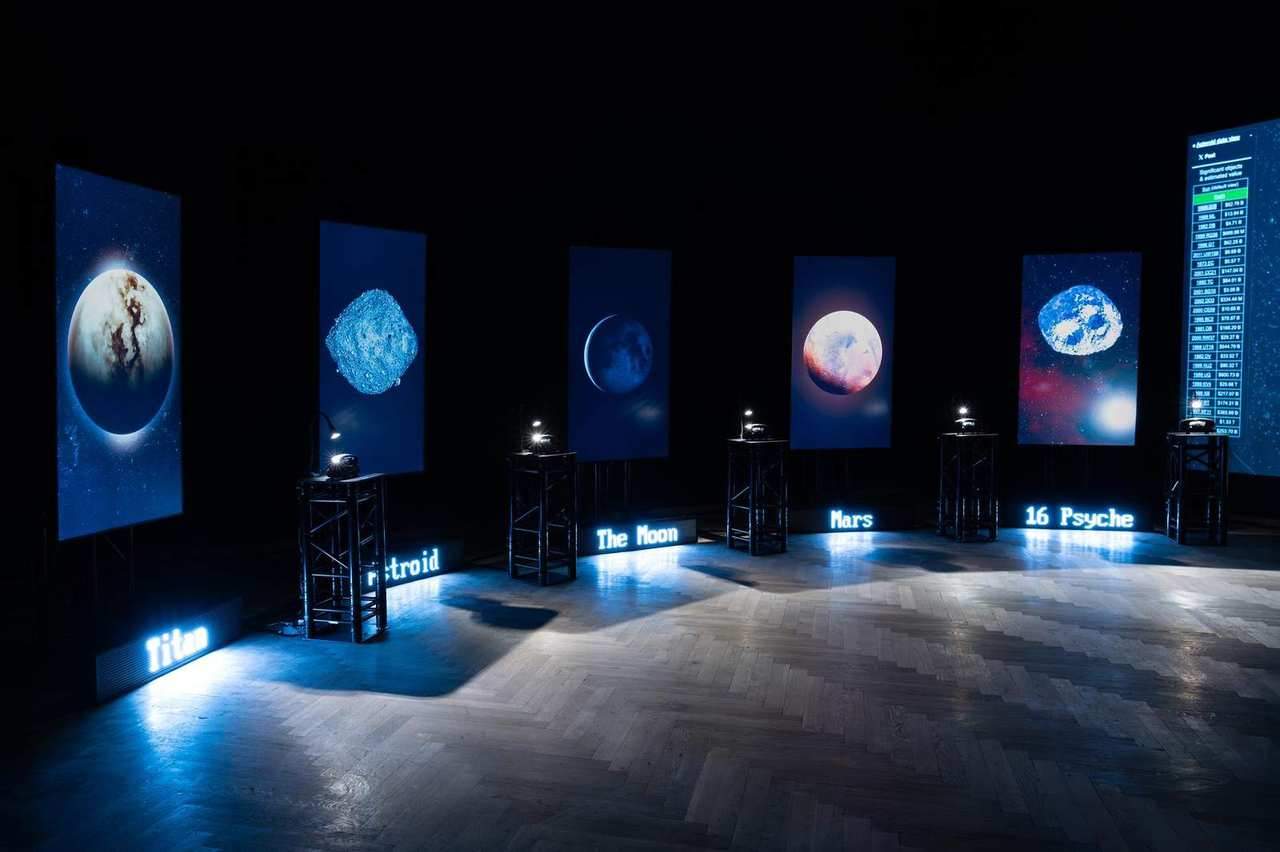
The gold rush never ended - it just moved off-planet.
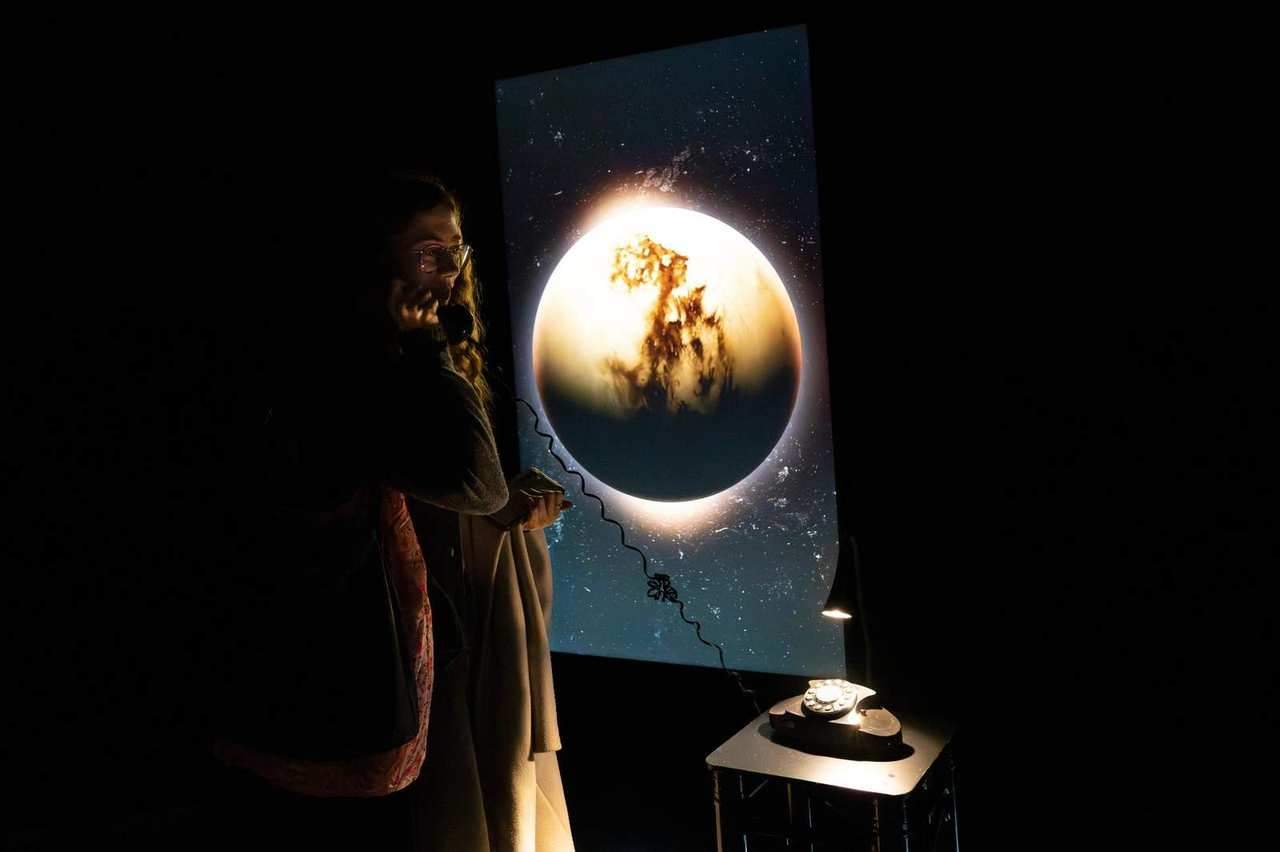
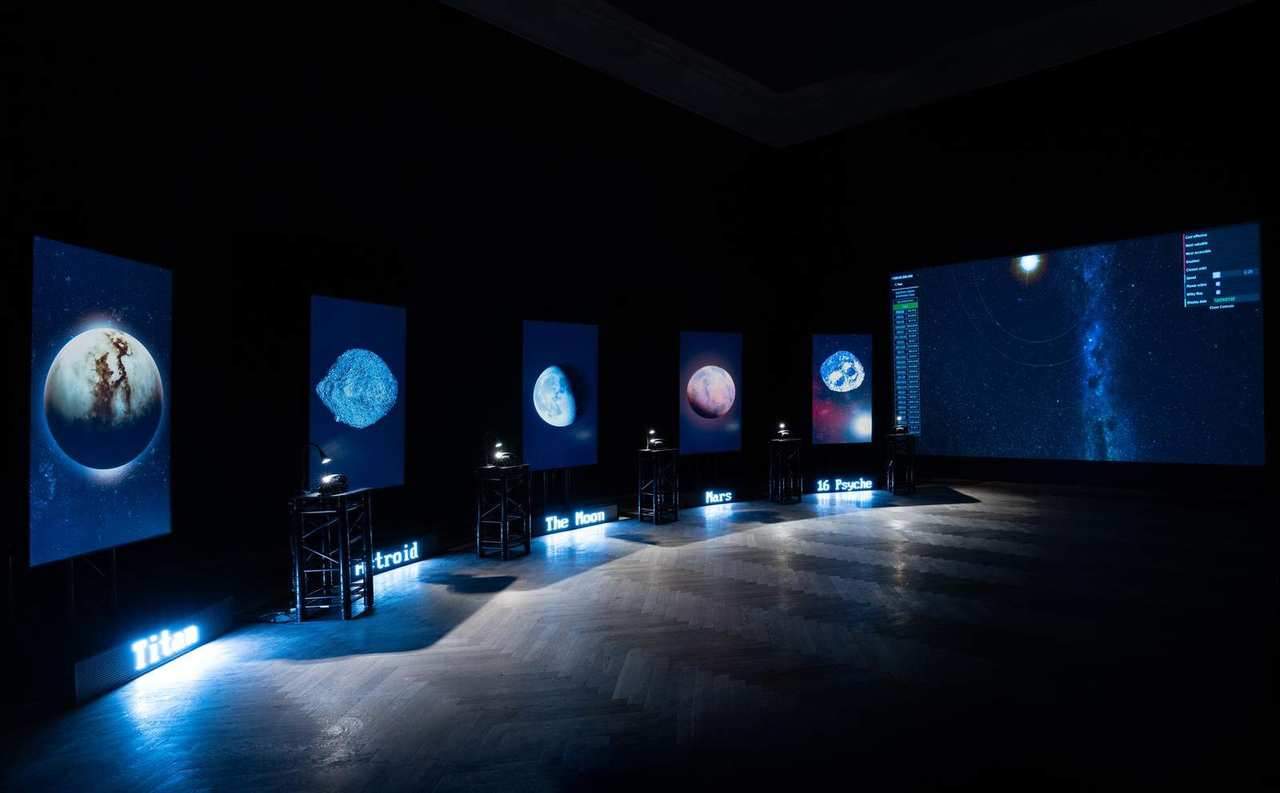
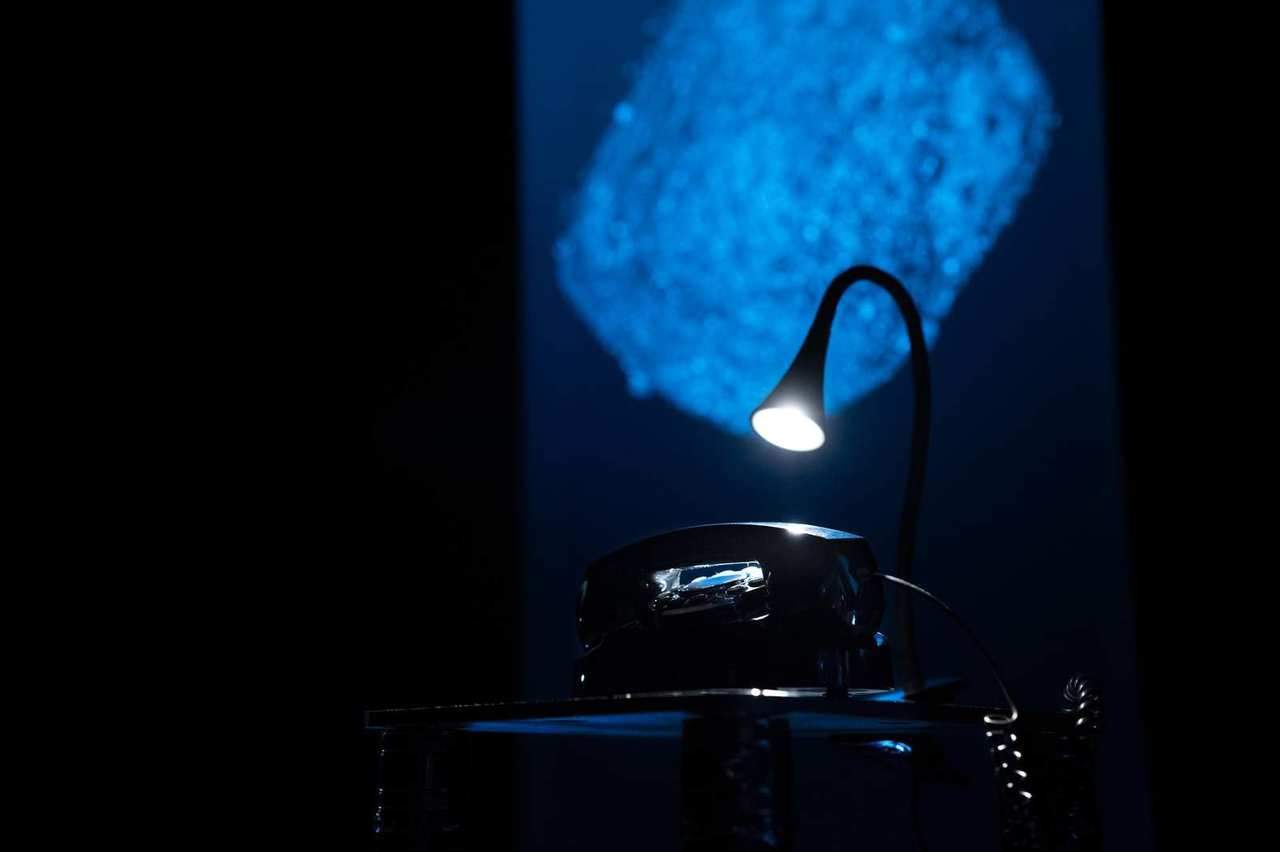
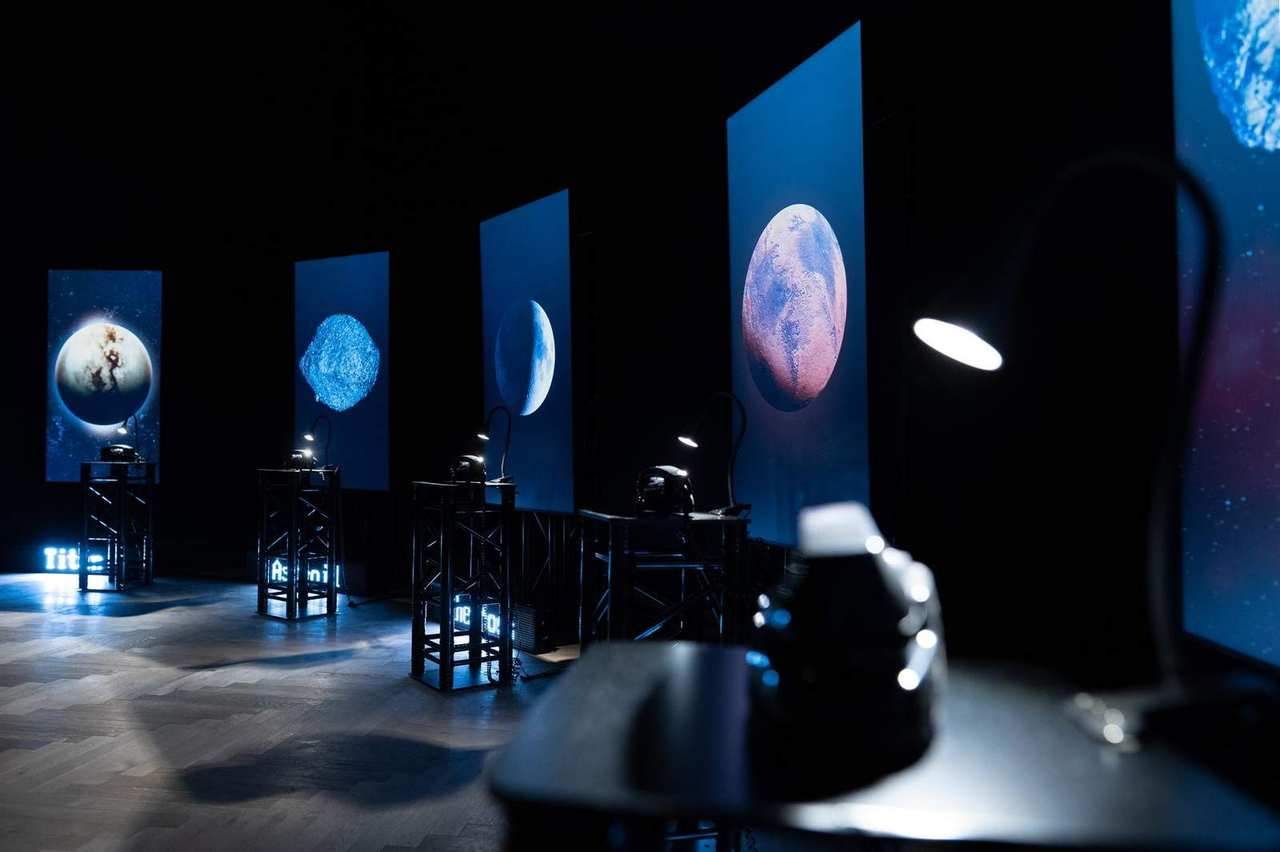
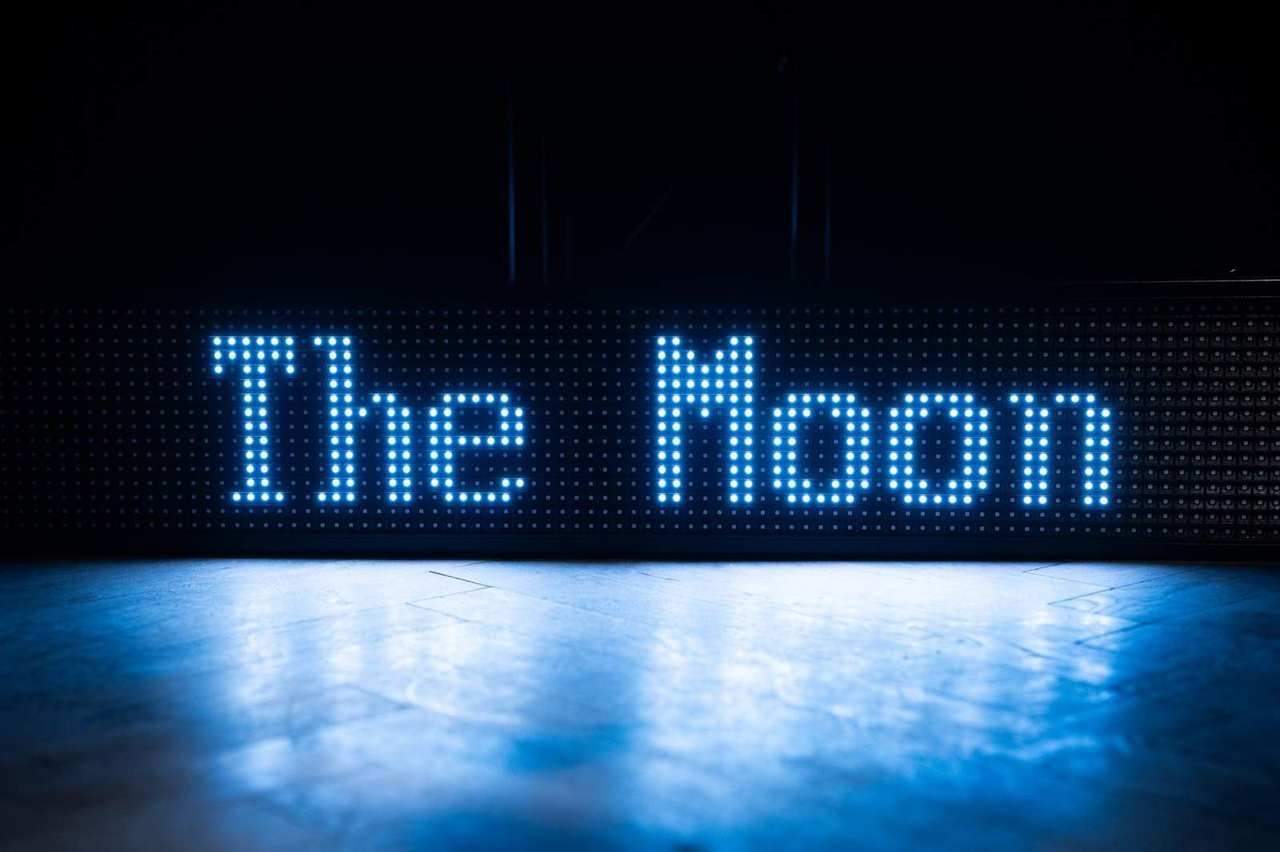
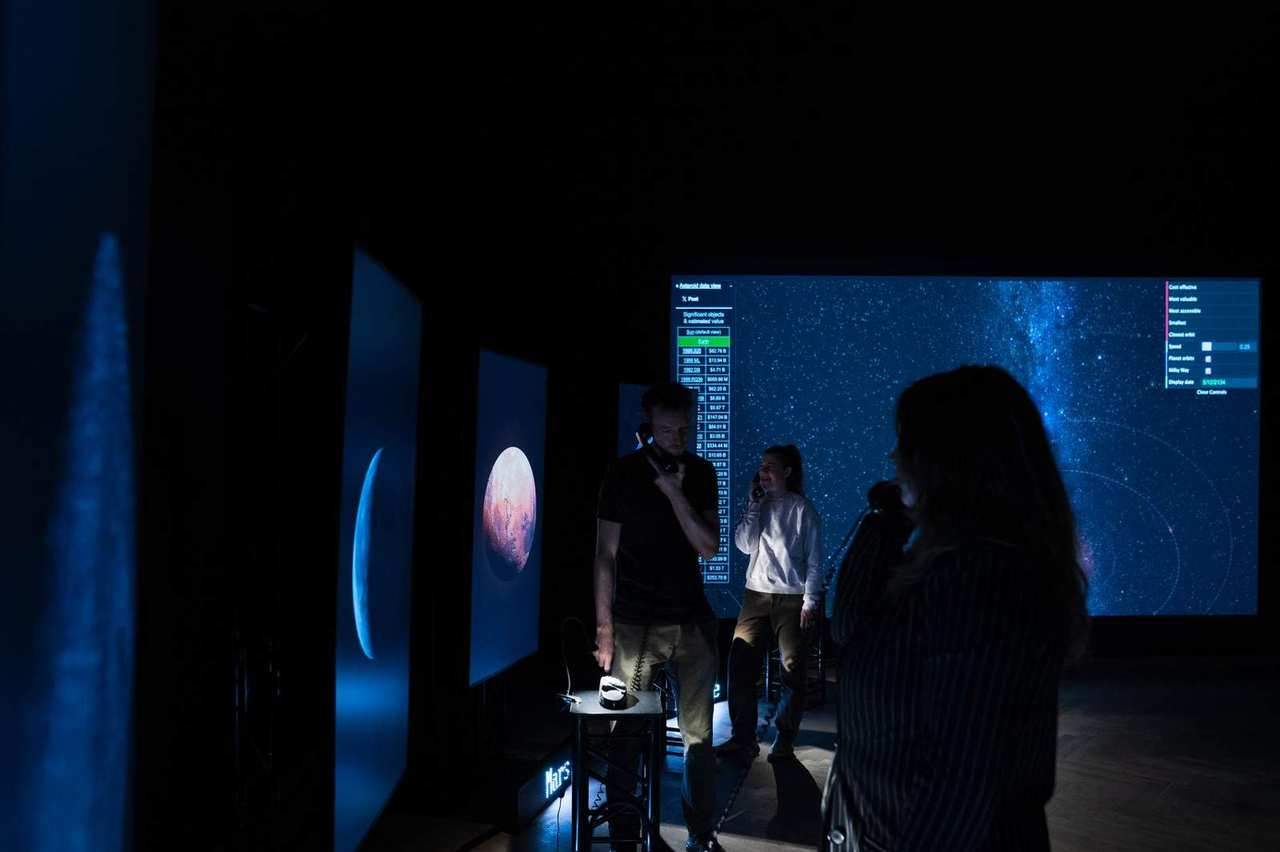
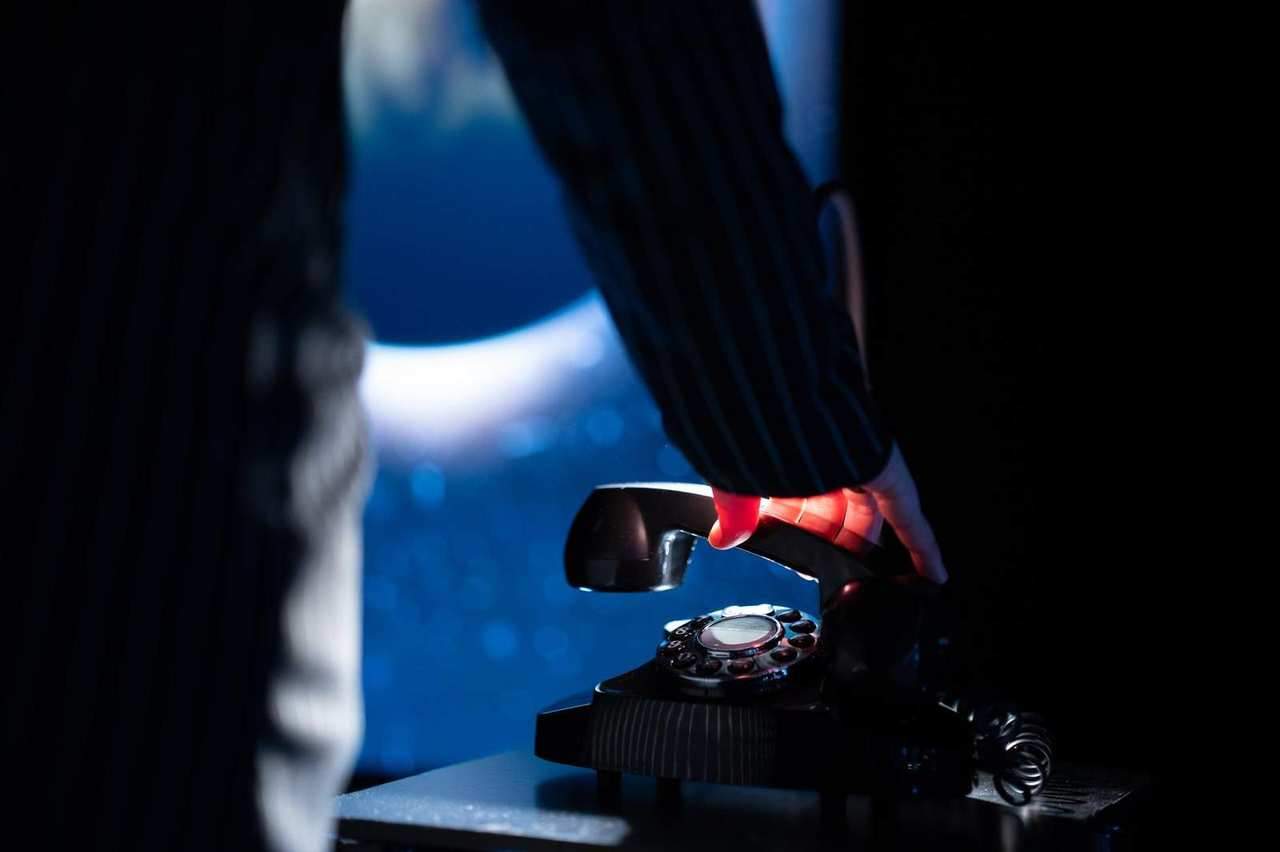
Celestis Obscura is an installation that brings together five celestial bodies - Titan, Asteroid, Moon, Mars, and 16 Psyche - each currently the focus of emerging commercial mining or colonisation ventures. In a dark, intimate space, visitors encounter each body individually: a glowing planetary surface suspended on its own screen above a desk, accompanied by an old telephone waiting to be picked up.
The work draws a direct line between historical resource extraction on Earth and the accelerating commercialisation of outer space. It asks what it means to understand these distant worlds not as unknown frontiers, but as economic territories already in the process of being mapped and claimed. At its core, the work reflects on how systems of extraction, ownership, and value are projected beyond the planet itself.
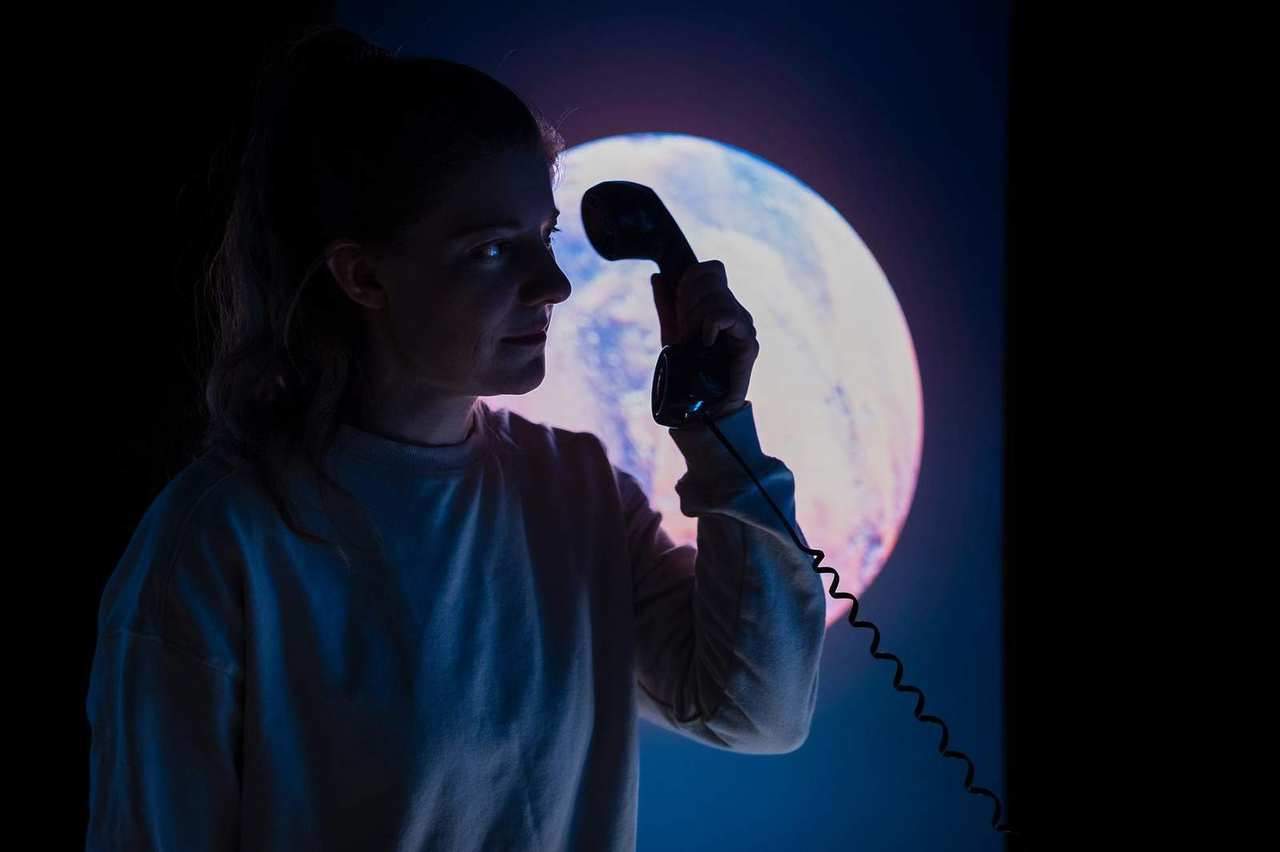
Five vertical monitors display 3D renderings of the depicted celestial objects, spinning in the void in an endless seamless loop, while a projection on the wall shows data from an open-source database that tracks the monetary value of celestial objects. The work has two states: idle and interactive. In the idle state, the five actors have a conversation among themselves, reflecting and arguing with one another across an eight-channel audio work. When an audience member picks up one of the phones and asks a question, the actors stop talking among themselves and instead engage with the audience.
The system is built in TouchDesigner and runs entirely on local infrastructure. Each of the five stations operates a full voice pipeline: Voice Activation Detection (VAD) identifies when a visitor speaks; The audio transcribes the audio locally; a quantised 12-billion-parameter language model generates the character’s response using a deep system prompt and a thematic Q&A knowledge base covering topics including economy, labour, ecology, technology, and the cosmos; and Kokoro synthesises the reply as speech and routes it back through the telephone handset.
The five agents run as independent asynchronous processes within a shared TouchDesigner network, coordinated through Python extensions. Conversation history is maintained across turns, and each character’s voice, response speed, and personality parameters are individually configurable at runtime. The entire AI pipeline, speech recognition, language generation, and speech synthesis, runs on-device, keeping latency low and the system self-contained.
Tech
Venue
Kunsthal Charlottenborg / CPH:DOX (DK)
11 - 22 March
Team
Gallery